IMO IMO IMO IMO

Tuesday, July 15, 2008

Cormack McCarthy's "The Road"

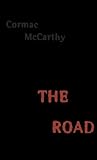
The Road The Road by Cormac McCarthy


My review


This book was great, and worth all of the recommendations and accolades it is getting from people. I'm a little nervous about the movie, but that's beside the point.


First, I was totally engulfed by and invested in the story from the beginning. Sometimes I have a hard time getting into books, getting into the flow, but the writing is so easy and the elements of the story so few at first that there is no struggle to latch on. McCarthy does a great job of hooking you into a story that you would probably rather not hear, because it's one that doesn't seem all that implausible. Many post-apocalyptic stories seem far-fetched and alien, but this one was different. The characters seemed too much like people I might know now, dealing with the immediate aftermath of a peril that doesn't seem like it is that far in the future, based on the way he describes life before the catastrophe.


What this book did, which no story before has ever done for me, was make me feel grateful for every single thing that I have. Every meal I am able to cook and eat, every night I sleep in my own bed, in my own apartment, all of the things that make my life so easy and let me focus on inconsequential privileges like art, friends, and careless fun. It also made me remind myself just how fragile our way of life is, and make me confront the grim reality of how the world could be in the not-so-distant future if we're not careful.


A great read.


View all my reviews.

Labels: ,

Wednesday, July 02, 2008

Downfall

(Spoilers)

The other night I finally watched Downfall, the story of the last 12 days of the Third Reich, based on the book of the same title (both are actually originally in German, titled "Der Untergang"). I'd been looking forward to this quite a bit, actually, after watching this video, of all things. I had no idea this movie even existed, so when I saw it I knew I had to see it. So much time gets spent on the concentration camps, the POWs, all of the mayhem and carnage of WWII, but very little mainstream cinema deals with trying to paint an ACCURATE picture of Hitler, his strengths and weaknesses, his humanity. The fact that it was taken on by an entirely German cast and crew is also great.

The film clocks in at about two hours and forty minutes. The amazing part is, at no point in that time span was I bored. Never. I was always trying to see more, trying to know more. So, the fact that I wasn't totally enthralled by this thing is pretty surprising to me. I think one of the big problems for it was that they tried to stay true to the book's wider scope. It's about the whole country at the very end of the war, not just about Hitler and his closest cabinet. As a result, their are sidepocket parallel narratives that, for me, were a total waste of time, such as the Hitlerjugend (Hitler Youth) Peter and his family. Completely irrelevant and uninteresting to me. In fact, I almost think I could have lost Traudl Junge, his secretary, too. I wanted to see what was going on with Hitler and those immediately surrounding him: those closest to him.

Here's another problem: only 12 days. The movie starts around 1942 when Hitler hires Frau Junge to be his secretary. It immediately fast-forwards to the last 12 days of the war. So all the intense relationships that Hilter has have already long been forged, and all we watch is the aftermath of the decline as these people finally see the end and most of them commit suicide. While the events are often startling, you feel no compassion for these characters. This may be a surprising thing to even want to feel for them given that we're talking about the top Nazis. But since we're dealing with a film that is NOT a documentary (and maybe even if we were), I think we need to find something in these people to at least empathize with, which makes their beliefs and downfall that much more gripping and visceral. Granted, there are plenty of emotional and sympathetic moments between characters, but it is at a point where they have already decided their feelings for one another. It is basically watching people unravel, which has its merits, but allows for a lot of distancing. It is a real skill to create a film about a villain, and make that villain somehow worthy of sympathy, but this is not really something that happened here.

Of course, the film has its merits. For one, the sense of claustrophobia is palpable, as a great deal of the film takes place within Hitler's bunker. The space is small, the lights flicker from time to time with the falling of heavy artillery, and the camera is often hand-held. The cinematography is great, too. And I think each actor inhabited his or her character quite well. They were very visibly affected (scenes of note: Frau Goebbels giving her children poison, Mr. Goebbels confiding for a moment his intense unhappiness about being sent away by the Führer, and crying about it, any of Hitler's outbursts, the two Hitlerjugend suicides).

The problems that I've laid out are not, I believe, problems in the eyes of the makers. After watching the making-of documentary I have come to realize that they had no desire to just talk about Hilter, no desire to make him a sympathetic or tragic figure. They wanted to make him REAL and ACCURATE, but not sympathetic, I don't think. And these other, seemingly superfluous narratives were also important to them, because I can only assume they were in the book. However, in my opinion, if they were able to hold my attention seemingly quite easily for almost three hours, that time could have been slightly better spent.

Labels: ,

Friday, June 27, 2008

Say Anything...

Let's put aside for a moment my great appreciation for John Cusack and Peter Gabriel, and the fact that Ione Skye looks like my fabulous friend Kristy Koopman. I just watched Say Anything... for the first time (yeah, I know, thanks), and this movie is unbelievable. Is it an amazing romantic movie? Yes. But the best part is that it's not a traditional one. Granted, it steps in a couple of the mud-puddles that others have, and perhaps the irony is that it may have set up those puddles to begin with, but this is a romantic film of honesty.

One thing that immediately struck me, once it got past it's starry-eyed first-love butterflies is the clarity to their conversations. The way that they deal with their problems is really rather extraordinary. The way that the two protagonists in most romantic comedies get over their issues is always terribly superficial, and often involves some outside source coming in at the last minute to save the day, or perhaps some simple moment of courage that sets everything right.

The beauty of Say Anything... is that it doesn't all work out. Romantic films like to parade themselves as windows of truth into the way romance can really happen, if we believe enough. And while this one might not be the posterchild for that mantra, it does something extraordinary. It tests our patience, and it reminds us that we don't always win. Everything doesn't always go "to plan."

The fact that the film ends with Diane's father incarcerated is a big choice. But there is an even bigger choice - the last shot of the film. If this is a spoiler for you, I'm sorry, but you, like me, have had just shy of twenty years to see this one so I'm going to spoil away. The final shot, of the young couple on a plane to England, fearfully awaiting the ding, which will come "any second now," that means everything is OK. That last shot lasts 23 seconds. Yes, it doesn't take a degree in much of anything to figure out that this shot is about anticipation, and puts us in their shoes. But it's twenty-three seconds. While that's not much for some (my favorite director is Apitchatpong Weerasethakul, for crissakes), that is a pretty bold move for a popular romantic comedy. The shot is completely static, and the frame contains virtually no movement and only one line of dialog. This is fabulous.

I have the tendency to talk things to death, to analyze things, and it feels crude and almost inhumane for me to try to theorize a late-80's romantic comedy, so I won't keep going any further than I have. But I will say this; this movie is a classic for a reason. Yes, it has some thrills, but it deals with the realities of a young relationship in a very mature and realistic way. There are always some movie-magic moments in those relationships, and then there are the moments of painful honesty where we don't know how to deal with the thing that we have to deal with. There is no such thing as a total happy ending. As Diane says, "good things always happen with bad things." You don't get to have your cake and eat it too. And at the end of it all, sometimes we just have to wait longer than we'd like for the "ding" sound that means everything is OK.

Labels: ,

Tuesday, June 24, 2008

Neave Television

It's slogan is "telly without content," but Neave Television is anything but.

When you start watching, there's no telling where along its programming you will begin, but Neave takes you on a hilarious ride through a variety of spoofs, funny B-movie clips, various internet-based content, and other stuff. Some of it is recognizable (for instance, a 2001: A Space Odyssey spoof), some of it is completely inscrutable (giant foofy-dog monster), and there's plenty in between.

What's most exciting to me about this is the fact that its "lack of content" is strikingly engaging. Because the viewer has no idea what will come next (and because most of what the viewer has probably seen already is funny), one may find oneself completely glued to the screen. For me, this was a hundred times more engaging than just about anything I catch on TV when I turn one on.

The only downside? It looks like there's only a set amount of clips. And, while it does go on for ten minutes or so, if you're like me, you'll find yourself disappointed when you see a clip you've already seen.

This plays brilliant host to commentary on both TV and internet content, and does nothing short of entertain along the way.

Labels: ,

Saturday, June 21, 2008

Sigur Rós

Frustrated that I woke up early the other day for the fall tour dates ticket presale and didn't get a damn thing, I started poking around the Sigur sites. Also, I found a poster today reminding me that their new album is coming out on the 23rd!

What I discovered when I got to SigurRos.com is that you can already listen to the album, streaming, for free!! I'm doing that right now. So far, I have to say, this is a real transformation for Sigur Rós. This metamorphosis was evident in gobbledigook, whose energy was as young and vibrant as the actors in its video.

This light, youthful abandon carries into the second track, and it becomes clear that Sigur Rós is not just about the long, dramatic epic anymore. They are also capable of calling in quick songs that pack a flowery punch to the ears. In and out.

Track three is a quiet ballad, soft and sweet. If Jónsi didn't have such a distinctly sweet voice, you would easily forget that for three tracks you've been listening to the band that brought you albums like Ágætis byrjun.

These tunes are almost pop. ALMOST. There is still a quiet sense of importance, of the impending arrival of something great, something bigger than us.

Then comes track five. As it begins, "festival" is cavernous and echoing, the song's lyrics remind one of "e-bow" from (), as though the original track had been stripped down and sung by Jónsi alone in the dark. The song serves as a reminder that the somber tones that have made the band the tearjerker that it is are still incredibly relevant to the band. By the end, the sound is big and bold, pompous and seemingly in fanfare. Hoorah! So beautiful.

The choir and strings on track seven are delightful and cinematic, and still somehow Sigur Rós. Yet another track that proves just how flexible this band really is.

On "All Right," the last track, Jónsi sports English lyrics. Almost every Sigur Rós song to date has been in Icelandic, the exception being all of (), the lyrics of which were all in the made-up language of Hopelandic. But don't get your hopes up about finally being able to understand the words in a Sigur Rós song. Despite the vocals being featured, the words are surprisingly indistinguishable. They bleed into the song like dye in fabric, taking their time to fill the space. And while that means losing definite form and content, it also means a beautiful layer that operates just the same as the vocals always have. This track is maudlin, sober, like a funeral march - a fitting end, perhaps, for the end of the album. It ends silently and sparsely, sneaking out the back door before you can realize it's gone.

Overall, the album is pretty great. It lacks some of the things that have made me adore Sigur Rós, but provides new ones. This band is extraordinary and sensational, and they have begun to sweep the music world anew of late. It's a beautiful thing to watch.

Also, if you finish listening to the stream of the whole album, you get lots of fun behind-the-scenes video clips to enjoy as well.

Labels: ,

Thursday, June 19, 2008

Mumblecore I

I've been starting to immerse myself in the world of "mumblecore," a contemporary American film movement fronted by, among others, Andrew Bujalski, the Duplass brothers, and Joe Swanberg, and I have to say, I'm rather elated by it.

Now, not every moment of this stuff is great. In fact, sometimes it's hard to watch. But it's only because it reminds me so much of myself - my own boredom, my own anxieties and lack of direction. It is the stuff of my life. In particular, tonight I watched Mutual Appreciation, and when the credits came on, I had a huge grin on my face.

Bujalski, himself a rather awkward fellow (or at least he plays one in this and Funny Ha Ha, the other of his I've seen), somehow manages to have an extraordinary knack for dialog. The most impressive part of all is that this dialog, for all its natural presentation and realistic flow, is largely scripted. This is a phenomenal feat in and of itself. Throw in the fact that he uses non-actors (Justin Rice is the lead singer of Brooklyn band Bishop Allen, Bill Morrison is the experimental filmmaker behind the awesomely gorgeous Decasia, and others) and his films are an absolute wonder.

Mutual Appreciation manages to tap into the real conflicts of day-to-day life without the fanfare that often accompanies the popularized indie flick. No one is crying, there are no grand gestures. Everything is very well-contained within the canon of realistic poses. These performances seem so vividly real, and so easy to relate to, that you almost hate Bujalski for making these people so real. And at the end of the film, you don't even realize you've been taken for a ride. Like life, the thing seems to simply be one big plateau. But then you realize you've developed attachments, and you have your own motives, your own desires for the future of the characters and their relationships.

One thing that makes Mutual Appreciation really exciting is its lo-fi, but 16mm, picture. This truly embodies the Cassavettes style, and makes Bujalski most worthy of the mumblecore syno-moniker "Slackavettes." What I found so hard to relate to in Cassavettes, though, somehow becomes my raison d'etre in Bujalski - people talking. Obviously the talking heads approach is not a new one, nor is it specific to these kinds of film movements. The mumblecore predecessors, like Richard Linklater, have mastered this talent as well. But somehow, the awkward charm in Andrew Bujalski's films, embedded in a real desire to portray the culture of which I am a part, is something truly magical. And at the end of both of his films that I've seen thus far, I have laughed. Not because of the moment, but because of my moment after the last moment. His films are, in short, endearing.

As I say, I've been on quite the kick. So far, of the "mumblecore" movement, I've seen:

The Puffy Chair - The Duplass Brothers
Funny Ha Ha - Andrew Bujalski
Mutual Appreciation - Andrew Bujalski
Kissing on the Mouth - Joe Swanberg
Young American Bodies - an internet series by Joe Swanberg

And, as a bonus for me, I'll tell you that you can see me in a single frame of the Bishop Allen music video for Click Click Click Click, which they shot just outside my apartment here in Williamsburg. I'm at the 1:44 mark in the white t-shirt, trimmed beard and hair. Woot!

Labels: ,

Tuesday, June 03, 2008

Mister Lonely. Seen it!

Well, I finally got myself out to see Mister Lonely this evening at the IFC Center. Even after seeing Harmony Korine talk about the movie, and watching clips and the trailer, I still had no idea what to expect with this thing. One descriptor I've read about this film is "dream-like." And while that word gets thrown around a lot, I also think that it's incredibly useful here.

Two separate parallel narratives are the subject matter of the film - in one, Werner Herzog plays a priest living in a small village in Panama, and while doing a food-drop with a few of his nuns, one of the nuns inadvertently falls out of the plane. As she falls, she prays to God for the ability to not fall, but fly. Or, at least, land unharmed. Miraculously, she indeed lands unharmed. The other narrative focuses on a Michael Jackson impersonator (Diego Luna), who indeed goes by the name Michael, living in Paris. He befriends a Marilyn Monroe impersonator (Samantha Morton), who takes him to a commune of impersonators that includes the likes of Abe Lincoln, the Pope, and Marilyn's husband Charlie Chaplain and their daughter Shirley Temple (to name a few).

First, the performances. For me, the best performance comes from Samantha Morton. With the exception of her first few moments, every word out of her mouth rings brazenly true. Her emotion is raw, and she feels nothing short of consistently present. She packed the most emotional punch for me as a viewer. However, no one really put in a "bad" performance. Some of them were a bit two-dimensional, but everyone was very certain of his or her character. Everyone was in it to win it, and that definitely includes Werner Herzog. My only complaint about Herzog's performance is that by the end it feels a bit like he is parodying his own character, not taking the role seriously.

As for the film itself: I swung very wildly during this one. On the one hand, there are some moments so pure and gorgeous (if occasionally painful or heavy) that they are poster-children for the transcendent power of film. On the other hand, there are cheap moments shooting for cheap laughs, and moments that strive for greatness but can't quite make it. Those good moments, though, feel truly effortless as good film often does. And the music selection is absolutely flawless. Moody, occasionally funny, and always splendid, the music did nothing short of bolster the film very well.

Overall, it's a decent one. One thing that I was afraid of was that the film would be a high-budget mockery of Korine's style, and make me feel as though my time and respect had been completely squandered. And though there were moments that, had they lingered, would have made me feel that, I do not remotely regret seeing the film. I laughed, I cried, and occasionally was unimpressed. Not a bad showing for someone as unpredictable as Harmony Korine.

Labels: ,

Friday, May 30, 2008

Flashing Lights... III

Really? Another one? OK K-dawg.

While video number three is, thankfully, better than number two (if you missed number two, here's a quick recap: all photos, gratuitous "sexy," and rape). A return to the element of mystery, some fantastic camera work. But seriously, why is Kanye putting out MULTIPLE VIDEOS for this song? Yeah, it's a good song, Kanye, we get it. Nothing is going to remotely compare to the excitement that the first one generated - short, sweet, out of nowhere, slightly self-effacing/tongue-in-cheek. When that thing came out, I was glued from start to finish, and when the song ended early, I was wide-eyed with "Dang" on my lips. Now I'm just kind of bored.


Labels: ,

Wednesday, May 28, 2008

Gobbledigook

There are two things I've been recently rather excited about: Sigur Rós and Ryan McGinley. And those two things just made sweet sweet love and had a baby. It's name is Gobbledigook.

In a delicious, supermarket-cheese-table-style sample of the new record, Sigur Rós has made available the audio and music video for the new single, "Gobbledigook." The song and video are VERY noteworthy for several reasons (other than the obvious, which is that they are awesome). First, this marks a distinct change in the song style of Sigur Rós, whose lackadaisical, contemplative melodies could best be described as sweet, heartrending lullabies. Where once tranquility was a dominant effect (if not a dose of melancholy), reckless, youthful abandon has taken its place. And the video follows suit. Traditionally, SR videos have been rife with slow motion, and cuts that take their sweet time. And while a lot of the green-toned color temperature remains from that style, this new video is light on its feet with rapid cuts, and motion that is never slower than a-little-faster-than-reality.

Also, of course, the video is exciting because it is inspired by Ryan McGinley's work, in particular the recent show he had at Team Gallery. These photos, and thus the video, share the same youthful abandon that this new style of song comes in. It is particularly exciting to feel as though these photos have come to life.

In a way, this marks a step in the same direction for both Sigur Rós AND McGinley. Looking at McGinley's photos, one gets the impression of watching someone at play in slow motion. The subjects in some cases are so vivacious and energetic, that even the still frame seems to beg to move. On the other side of the same coin, SR videos feel so slow and magnificent, each frame perfect, that they seem to almost freeze in time and become brilliant still images. Add to that similar color tones, and an interest in youth, and it starts to become apparent why these artists have come together to MOVE FAST together.

This song (which is available for free download at the Sigur Rós website) bears a lot of similarity to the Animal Collective, and it has indeed been drawing that comparison. True, the beat reminds one of the pseudo-tribal rhythm of "The Purple Bottle" (off of "Feels"), and the playfully almost childlike vocals seem indelibly referential as well. But what, I think, gives Sigur Rós some cred in this case is how disparate this sound is from where they've been only recently. Context is the key word here.

All in all, I'm really thrilled about this video. I'm also thrilled that the band is continuing in its path of making things exceedingly free and easy to access on the internet, and in high quality! They are helping to pave the way toward massively free and outstanding-grade media.

Enjoy the video! And, is it me, or is Jónsi channeling Ziggy Stardust with that makeup?

Labels: , ,

Saturday, May 24, 2008

Flashing Lights... II

How do you go from this:


to this:


?

I mean, seriously. The first video was unbelievable. Everyone was totally surprised by it. Such an amazing concept, beautifully shot. Then, you get this second video: terrible concept (oh, yeah, it's SUCH an amazing idea to watch a girl virtually naked get dressed, go out, then get raped, while Kanye chills out with some random girl in some strange room, all touchin' her and watching her dance), not all that original to do it in stills. And what the hell is this thing saying about rape?

Here are my two specific problems with the inclusion of the rape scene: First of all, the black-and-white inserts. If you'll recall, earlier in the video these B+W cutaways were meant to glamorize - they were pinup poses, hyper-sexualized for the camera. The fact that the same style is then incorporated for the rape sequence seems to imply some kind of glamor, or at least SEXUALITY to the rape. The B+W shots during her rape compare it to her sexiness getting dressed. Uncool.

Secondly, all that happens to this girl in the video is the following: She wakes up, has a cigarette and a mimosa, makes breakfast, and then tries on clothes for a while. When she presumably picks the right outfit, she goes out dancing and getting drunk. She walks home in the dark and gets raped. There are only two significant events in this timeline: she gets dressed, she gets raped. The getting dressed is significant because we spend the most time with it. The rape is significant for obvious reasons. I can't help but think of the old adage that girls are "asking for it" because of the way they dress...

Now, is this video trying to imply that when we objectify the woman at the beginning by viewing her as a sex object, we are committing a form of rape? While this is not a horrible argument, and an absurdly old one, if it is Kanye's (or whomever directed it) intent, it is completely misguided. It includes Kanye looking cool as he likes to do, which immediately discounts any serious intent. Also, the woman hams it up for the camera, which makes her complicit (eye contact, people). In fact, there is nothing about the video that directly portrays objectification as a negative thing at all. If anything, it is heralded.

The bottom line? The new video sucks. And it's completely insensitive.

Labels: ,

Wednesday, May 14, 2008

Slowdays

If you've been keeping up with the 'copter in the past couple of weeks, you've noticed it's been pretty slim pickins. Things have been rather hectic for me with work and my personal life, and what few things I've wanted to post about I just haven't had the time for. I want to check in though, so here are a couple of quick check-ins from the art world.

- Olafur Eliasson / WACK! -

In order to get myself pumped up for Eliasson's New York City Waterfalls this summer, I went to see his first American retrospective at P.S. 1 in Long Island City, Queens, entitled "Take Your Time." (There is also an exhibit at MoMA that I hope to catch) It was a delight to see his photographic work in person, and partake in the joys of his early, simple models. Also, I got to see "Beauty" for the second time, this time more intimately. If you have a chance, check it out. Also, check out the WACK! exhibition if it's still up. While I found a lot of it to be contrived (ironically, most of it probably spurred the kind of feminist art that has led me to feel that it is contrived at all), there was some really good stuff in there, including a relic of Marina Abramovic's "Rhythm 0."

- Cai Guo-Qiang -

Guo-Qiang's "I Want to Believe" at the Guggenheim is a STELLAR arrangement. I went for his exciting new piece "Inopportune - Stage One," but left with a thorough appreciation for his entire body of work. This includes life-sized packs of wolves, a bamboo raft ride, and the extraordinary new method of "painting" with gunpowder. While I went on Friday evening for "pay what you want," this exhibit is well worth paying full entrance price. If you haven't yet, SEE IT.

- The Day There Was No News -

What an exciting little video. I wish this thing were twice as long as it is. It's surreal. On the one hand, it seems to point out how two-dimensional, fictitious, and superficial the television news medium is. On the other hand, when considered with the title, this video has a startling sense of calm to it, that seems to tap into what we might feel if there were actually a day where nothing bad happened and there was nothing to report.

Labels: ,

Friday, May 09, 2008

Young American Bodies

I've just finished watching the two seasons (so far) of Young American Bodies, a short-form Internet TV show by Joe Swanberg (director of Kissing on the Mouth, LOL, and others).

I'm so excited about this show. It's engaging, it's low budget, the acting (while not decidedly dramatic) is very realistic. It is the perfect, honest show about sex. Every character has a flaw, no one is "good" or "bad." It just kind of feels like life.

While not perfect by any means, the show does a great job of proving that it is possible to make enjoyable, engaging media with virtually no money, that it is not necessary to adhere to Hollywood standards, that we have reached a point that cheap media is so ubiquitous that we accept simple sound and image recording. Our minds don't need the pristine work of Hollywood, they just go straight for the content. This is HUGE. The internet is becoming an increasingly relevant arena for burgeoning, free media, and it is a great pleasure to see that some people are taking it upon themselves to create media worth watching, not just more Television.

Labels: ,

Wednesday, April 23, 2008

Ultimate Reality

Words escape me tonight. I know that you know that's pretty unfathomable, because alas I not only like to talk, I like to use lots of words when I do it. But Jimmy Joe Roche and Dan Deacon have changed that, and tonight I will be silent. I let their work speak for them. I need only say that whether you are a fan of Schwarzenegger or not, your mind will be sufficiently blown if you watch all six parts of this thing.

May I present you with Chapters 1-6 of 40-minute-epic Ultimate Reality. (Watch it as soon as you can. It's only up for a week, and I don't know how long it's been up. Then again, you could always buy it on DVD.)

Labels: , , , , ,

Tuesday, April 22, 2008

"to hold a future body so close to one's own"

I went to college with experimental film/video maker Evan Meaney, whose work has continually surprised and inspired me. His most recent endeavors have been contained in the large body of work entitled "Ceibas," which is an exploration of myth: the myth of the Ceiba tree, as well as the myth of digital video. In the series, Meaney has been exploring the infrastructure of digital video, and the ways in which it breaks down both naturally and forcibly by hacking the hexadecimal and ASCII coding. His images are stunning and visceral despite often feeling incredibly passive, which is a testament to Meaney as both a maker and an editor. The work is also largely devoid of text (minus "prologue – How Mayan Lovers Might Find the Next Life" (2007)), which has previously been a signature of his work.

The newest installation in the Ceibas cycle is "to hold a future body so close to one's own," an online-gallery-based work that seeks to explore the passage of time. Time degrades all things, and it is no secret that digital media are vulnerable to this decay. However, where previously this decay and glitching has been transparent, written off just as simply as hairs or dust on a film print, here the decay is not only forced, it is the focus. These video portraits of 27 people have been dutifully hacked, but the differences between them are astounding.

This difference is possible because each video was originally compressed with a different video codec. What Meaney brings out in this simple, face-to-face examination is how startlingly differently each codec handles the synthesis of digital imagery through the web of pixelation. While different film stocks have always rendered different styles of images, they have all maintained the same basic physical infrastructure of silver hallide crystals on a celluloid emulsion. However, what Meaney makes clear is that the underlying structures of digital codecs are not subtle in their differences, and it is far from inconsequential what codec one uses. The result is staggering. What is equally exciting is that some codecs that might not be preferable initially to those concerned with as much image fidelity as possible become the ones that yield the most starkly beautiful decay, reminding the viewer that things are never as they seem, and of an overwhelming sense of transience.

Also, Meaney's choice to use portraits of people, rather than any kind of stagnant scene or simple color backdrop, is integral. Besides the obvious metaphor that "all people are different," the use of different faces becomes integral to the advancement of the Ceibas myth exploration. The subjects of these portraits become endeared, and the forced-decay of their visages invokes the lament of past lovers, lost to the sands of time and the breakdown of memory. Thought of in this light, the work yields startlingly fruitful emotional territory that rests complimetarily against its more somber predecessors of the series. As Meaney thinks of his codecs and decayed videos as children, so too do the subjects become our own wards, to whose faces we feel a sense of responsibility.

Evan Meaney's choices in exhibition method are crucial. The reason it exists on the internet rather than in a physical gallery, Meaney says, is that "these works wish to inhabit screens; as many as they can." And he has made good on this promise by including downloadable versions of every single clip for mobile devices. Which is part of the reason why this work is so important. One of today's most crucial discourses is happening between the old powers and the new, the copyright and the copyleft. The internet allows all digital media to be infinitely available to every person on the planet, which is a harrowing prospect to some. But others in the new generation understand that the desire to possess and control properties (intellectual or otherwise) is passé and unfashionable. The new face of distribution is limitless, and "to hold a future body" is a recognition of this fact.

Since its inception, digital video has largely been accepted as a transparent medium due to its pervasiveness in society and internet culture, its availability to the masses with terrifying ease. Its foundation, its structure, however, has hardly been explored or addressed in any forum outside of the technical community. While many past works have sought to utilize and exploit the medium for its lo-fi feel, the realism that it falsely professes due to its faster frame rate, and other reasons, no one has gone to the lengths that Meaney has in deconstructing the medium into its parts like an atom-smashing particle physicist. And, in doing so, he has revealed the medium to be a much more vibrant and beautiful one than previously believed. It is this previous lack of exploration that makes Meaney's work so timely and necessary.

Ultimately, this work is a confrontation. It is a confrontation with faces, a confrontation with history, and a confrontation with a thoroughly, and now revealed to be unjustly unexplored medium. And ultimately, it poses a question: What does "archival" really mean, and who will wait for us until we, too, are gone?

Labels: , ,

Forgetting Sarah Marshall

Saw this one a few nights ago. What a treat! This movie takes its cue from the standard break up, meet someone new who's so much better for you when you weren't trying to meet anyone, but it adds its own flavor. The Apatow-buddy supporting players add some great comedic moments (Paul Rudd and Jonah Hill doing some legwork). Jason Segel carries his weight, as well. He is hilariously awkward, executes the deadpan stuff perfectly, and the chemistry between he and Mila Kunis is surprisingly genuine.

Despite the fact that it looks like a pretty standard romantic comedy, I feel like Nicholas Stoller, Judd Apatow and Segel were trying to do something new. The first time I realized this was in the beginning breakup scene, which includes THREE SHOTS, albeit brief, of Segel's junk. Seeing this movie in the suburbs of New Jersey, where NO ONE expects to see dick on screen, made these moments even more hilarious. The audience was shocked, maybe even a little repulsed, but I think they still found it hilarious (though I could hear murmurs of old people asking why they kept showing his penis). And they made sure they got one more full frontal on Segel before the end.

Also, the moments between the main character Peter Bretter and ex Sarah Marshall are startlingly real. They talk about genuine things related to their prior relationship in a very adult, uncinematic way. These moments are combined with personal flashbacks to moments that illustrate a feeling they express, or directly counter something that they express. These flashbacks are not handled in the typical way: no sound effect with a fade to white, or some kind of transition, just hard cuts, employing some good old Soviet montage, and putting a little faith in the intelligence of the audience. And, after the flashbacks, there were no violent head-shakes trying to clear away the thoughts, or any other acknowledgments that what was just seen was a flashback. It just continues on, and we see the looks on the characters' faces in a new light. The audience does the work, here, which is a pleasure to see.

All throughout, discussion of sex is very frank. There is no holding back of profanity, no indirect reference (other than a line where Peter's step-brother says "You don't need to put your P in some girl's V," and Peter says, "No, I need to B my L on some girl's T's). When promiscuous new boyfriend to Sarah Marshall Aldous Snow advises a stranger on good sex, he makes no effort to avoid talking about Deep Penetration and Stimulating the Clitoris.

Basically, it looks like the ensemble came together to put a real and comedic twist on a tried-and-true genre, and I think it paid off in spades. While it's not the funniest movie I've seen in a while, it beats out plenty of others. It maintained my attention the whole way through, had me laughing, and I came away feeling some genuine affection for the Mila Kunis/Jason Segel couple.

Oh, and extra points for using Jason Bateman in a clip during the credits.

Labels: ,

Monday, April 21, 2008

New UNIQLO Line/Campaign


Wandering the streets of this fair city today, I discovered a very fun new campaign for UNIQLO.

In honor of the arrival of spring, UNIQLO has released its new UT (UNIQLO T-shirt) line featuring work by well-known artists, photographers, etc. What caught my eye about the campaign were the photos of Chloe Sevigny. I had to do a double take to make sure it was her, but it certainly is. While some of the photos simply splotlight the attractive models, many are pretty funny in their absurdity; Sevigny's and her partner in crime Tadanobu Asano's poses and expressions are often hilarious or awkward, all wrapped up in the always-taken-with-a-grain-of-salt style of fashion photography. And they all pop nicely against the plain grey gradient backdrop.

The photographs themselves are taken by Dan Jackson (not to be confused with one of my favorite contemporary painters, Daniel Jackson). I went to his site, and I have to say from what little I've seen, I think his work is terrible. It's uninteresting, kitschy, and seems largely unconcerned with any kind of intelligent discourse. But, he's obviously done something right to land the UNIQLO campaign, and I like what he did with it, so I guess that says something.

All in all, I'm psyched about this campaign. I love UNIQLO, I think the photos are fun, and it's great exposure for Asano, as well as Sevigny, who has proven time and again the versatility of her look and her capabilities as an actress and as a model.

Labels: , ,

Monday, April 14, 2008

BOOM.

The place is 54th St., just west of 10th Ave., and right next door to The Colbert Report's studio. It is a small, but elegant, theater called Ars Nova.

Last night I had the pleasure of attending the closing night performance of Boom, a show I'd been eagerly looking forward to seeing since it opened a month or so ago. This was one of those rare cases of judging a book by its cover, and its cover alone. We've all made those impulsive purchases because we like how something looks, and we all know that sometimes those purchases pay off in spades.

This was one of those times.

I went alone, which was not a bad thing in my mind. I was eager to see how my hunches were faring these days, and was relieved that I didn't have to be concerned about whether my company was having a good time. The theater was small, but nice, with a dynamic light design to keep me mildly interested for the half hour or more before the show began. The curtain was a brazen red.

With no fanfare, the "narrator" walked down the aisle and began the performance. She made a little bit of noise on a drum, accompanied by quirky facial gestures and a rigid posture. A cheap laugh, perhaps, but the audience seemed to appreciate it (though I was skeptical).

When the curtain was pulled back, it revealed the scene that would remain the milieu for the duration - a meek laboratory with cabinetry, a futon, a small countertop, a table, and a fish aquarium with four fish swimming within it.

The plot is simple. According to the site:

"In Peter Sinn Nachtreib’s BOOM, something is about to explode and the fate of humanity hangs in the balance. When Jo answers Jules’ casual- encounters ad seeking ‘intensely significant coupling’, she has no idea what she is in for. Stuck in his makeshift lab-turned-shelter and surrounded by cabinets full of bourbon, a lifetime supply of tampons and only a tank of fish for company, they’re in for one hell of a blind date."

Jo answers Jules's craigslist "casual encounters" ad for, among other things, "intense coupling."

To add a bit of my own detailed information: Jules is a homosexual biologist who has calculated the imminent arrival of a comet that will wipe out all of civilization. Jo is a twenty-two-year-old college girl studying journalism and looking for a story of genuine hope that doesn't include an array of restricted topics such as the homeless, the disabled, etc. So she has answered Jules's ad in hopes that it is in the fleeting moments of random sexual passion that she will find that hope.

I'll summarize so I can get to the meat: yes, the two lock themselves in. Yes Jo is pissed. Yes, the comet does indeed land and destroy all of civilization and most life on earth. Yes, the two manage to help propagate life on earth (but no, not in the way you think).

This play was fantastic and entertaining, despite the premise being so ludicrous (every time I re-read the description online, I got slightly more skeptical.) It doesn't seem like it would make for good drama, but it does. There are actually two narratives running at once: Jules and Jo, but also the slowly unfurling story of the quirky, passionate narrator herself. It turns out this show is actually an exhibit in the far future that shows how life came to (continue to) exist on Earth, and this narrator is the one who is in charge of the display. Her story contributes a very interesting element of self-awareness, and her passion yields surprisingly fruitful emotional territory.

To return a moment to Jules and Jo... It is a well-worn structure, at its heart. A man and a woman, who hate each other from the outset (well, minus when Jo still thinks Jules is straight and that he wants to have sex with her) suddenly come to appreciate and love each other despite all odds, or rather as a result of them. The two reveal insecurities and vulnerabilities to one another despite their inclinations, and when their perspectives finally come about face, it is a glorious moment. There are a precious few minutes where they actually get to relish in their feelings for one another before their plot comes to its exciting, dramatic denoument. But it is magical, dear readers. Make no mistake.

What makes this show really beautiful is the narrator's desperate, noble desire to save this "show," a show of which she has been orchestrator since its inception, but which her superiors have deemed to be ineffectual and expendable. "Tonight is the last night I get to do this," she says with great conviction and lament.

Boom is a curiosity of fits and starts. For a while, when the story of Jo and Jules reaches some kind of head, it is frozen in time by the narrator so that she can tell a joke, or some kind of story. There are times when these interruptions are a nuisance, but only just enough to make one realize how much one is invested in the main story. By the end, this woman's interjections do not freeze the main narrative, but rather run tandem to and coincide with it - meld with it. The two become one story. The emotional peaks and intensities of the two collide and compliment each other: two narratives separated by massive amounts of time, one commenting on the other, but together creating a whole larger than the sum of its parts. On several occasions I found myself teary-eyed by its profundity.

While I am always thrown off by theater acting at first (the strangeness of the reality that I am watching performances, and that they know they are performing, and that we mutually recognize that we're there at a specific moment for each other, always puts me in my head, whereas film tends to convince me that I am a voyeur looking upon an already-documented event), I was able to settle in and accept the peculiarities that I don't always like about the style. Each actor gave his or her role the fervor required to make a believable character. No one hesitated or held back, and I believe that as a result, the show is a success. Such a bizarre performance could easily be gimmicky, slapstick, or otherwise falsified, but enough risk was taken that the show was not relegated to such half-witted atrocities.

Another huge success of Boom is its execution of climax through the cunning exploitation of effects. The crashing of the comet is brilliantly invoked through relatively simple means. Gradually, the light outside the door gets brighter and brighter. Then, the room goes absolutely silent, and the lights go out. In the tension of this moment comes the ever-so-slightly-delayed "crash," and light landing on a cascade of smoke pouring from the ceiling. Nothing is visible on stage. When the lights come back on, the set is in total disarray. The characters lay unconscious on the floor, the shelves have all come somewhat loose from the walls and opened, spilling out contents. The lights are out save for two lights running on a backup battery. It is a stellar use of relatively simple toys and tricks, running on a small budget that creates all the magnitude of a giant rock hitting the surface of the Earth. Like the scene in Wes Anderson's "The Darjeeling Limited," wherein Adrien Brody and the boy he tries to save are pummeled under the surface of the water, or in "The Life Aquatic with Steve Zissou" when the helicopter crashes, the impact is visceral and startling: enhanced, surprisingly, by the lack of sound.

Likewise, the final scene when the door is opened at last is also bolstered by effects. A blinding light, the rise in the volume of everything, the particles blowing in from outside, and the urgency of the characters' love for each other and need to leave all come together brilliantly to enhance the ultimate climax of the entire play. No special effects needed, just a decent light and good acting.

As any good work of literature, film, or theater does, the play reminded me of the beauty of storytelling (in much the same way that "Paris, Je T'aime" did for me with filmmaking only a few weeks ago) and acting. The actors were not simply acting, they were truly invested in what they were doing. When they returned for curtain call, the lead actress was crying. It was closing night, and she had given it everything. It was clear that she was attached to this project, those people, that character. And I found, when the lights came on, and everyone was leaving, that I, too, was sad. The source of the emotion was a sudden sense of loss. I had grown attached to these characters, even if they were a little over the top, and the story, even if it was a little outlandish. I was stunned by the fact that something that, in pieces, looks nothing but comical, was able to come together in such a real, vibrant, and stunning show of what it means to be human, to be alive. It tapped into something very real, and very necessary. It succeeded in being a good drama.

Magic doesn't just happen in the movies.

BOOM starred:
Megan Ferguson - "Jo"
Lucas Near-Verbrugghe - "Jules"
Susan Wands - "Barbara" ("narrator")

Written by:
Peter Sinn Nachtrieb

Directed by:
Alex Timbers

Labels: , ,

Blindness Teaser

(Sorry, I wrote this post way back on the 6th, but forgot to finish writing the draft, so it's a little late)

It is with at least a little bit of relief that I share with you, today, the teaser trailer for Fernando Mereilles's Blindness. Why it was released on MSN, I have no idea.

A few good things:

The trailer seems very concerned with the visuals, i.e. simulating some of the "white blindness" that afflicts its characters. I have hopes that they might have some extended scenes of pure white, or white with minimal detail. It has a phenomenal cast, and doesn't seem to take place in any recognizable country, which was one of the exciting and off-putting things about the book.

A few bad things:

The narration in the trailer is horrible. Affected and uninspiring, it doesn't bode well for either the content or the people it tries to appeal to. Furthermore, it is cut like a horror film. Bad choice, since it's not a horror story in the sense of the film genre.

Obviously it's just a trailer, but who likes speculating with as little information as possible more than film people

(Answer: The US Government. If you answered right, send us your UPC plus shipping and handling for a free "I <3 Freedom" mug!)

Labels: ,

Thursday, April 10, 2008

Missing Vonnegut

It's tough when important, good people die. I myself began reading and loving Kurt Vonnegut only a year or so before he died. For better or worse, the guy was always true to himself. He acted like every word was a throwaway, but he meant everything he said, even if it seemed off-hand. When he died, despite the fact that I'd "known" him for a lot shorter of a time than others, I was bummed.

So my first inclination when I saw a review for "Armageddon in Retrospect" on the AV Club was to be excited with a tinge of mournfulness. It's clear that the reviewer had the same feeling when he first was aware of the book. But his review expresses the same inconsolable truth that comes when someone dies: "He'll never come back." I can't help but grimace when reviewer Zack Handlen says, "there's something uncomfortable in reading a son trying so hard to emulate his father. When Mark Vonnegut fumbles a joke early in, it's impossible not to feel that his dad would've handled it better."

Sad, but perhaps true.

If you've never read any Vonnegut, get out there and do it! My first experience with him was Cat's Cradle, and still arguably my best.

Labels: ,

Team Gallery and Ippudo

Yesterday had two fantastic, new experiences in it that are well worth talking about (and neither one of them was doodoo freakin' everywhere)

The first was the new Ryan McGinley show at Team Gallery. The photos are the result of a massive cross-country trip taken by McGinley with a group of models. Entitled "I Know Where the Summer Goes," (named for an old Belle and Sebastian tune) the show stays true to its name. Part fashion photography (minus the fashion... the models are all nakey), part reportage, and part portraiture/fine-art, the series is a magnificent crystallization and localization of the construct of what it means to be "young."

While the nudity in the photos lends a sexuality to it, this sexuality is kept in check by the seeming naivete and fleeting interests of the models. Whether they confront the camera's gaze or engage themselves in their surroundings, there is a consistent honesty to the models' faces that gives the illusion that the photos are all candid.

And yet none of them are. Each day, McGinley would talk at length with the models about what mood or style he aimed to capture that day. The locations are all his choosing. And yet while some images like "Question Mark," or "Highway" bear the distinct impression of staginess, the raw truths of "Ann (Windy Truck)" and "Coley (Injured)" and countless others far outweigh any reservations one might have.

The photos run the gamut in both size and style. Some come as single or dual color schemes, others are vibrant. Some are tiny, almost 4x5, and others span an entire wall. All in all, the only place that McGinley seems to fail is in his staged surrealities. The most glaring of these is "Dusk Flip Smoke Trip." This photo is a stark departure from the rest of the series, approaching a somewhat contrived fine-art approach to human form and the element of time that is so often confronted by uninspired works. And while images like "Fireworks Hysteric" occasionally reek of the same posed unnecessary special effects budget," they at least attempt poke through the veneer of youth consciousness to get at something honest and bare, and the bodies of naked women flinching in the face of sparks that, presumably, probably kind of hurt at some point, combined with the sprightly, fleeting points of fire dancing in the visual space, cannot be completely discounted.

Small miscalculations aside, "I Know Where the Summer Goes" is a fantastic approach to making static something that is inherently fleeting, in a way that is simultaneously accessible and exciting. I intend to go back for a second viewing.

------

Following my trip to Team Gallery, I met with Rose for dinner at the brand new Ramen-ya, "Ippudo." The new American location for Tokyo Ramen mogul Shigemi Kawahara, Ippudo is great from the moment you spot its facade on its otherwise thoroughly bland block of 4th Ave. The outside is beautiful, crisp, and darkly alluring, like any good Tokyo Izakaya or Ramen-ya. A blend of glass, wood, and calligraphic signage, the facade is nothing short of alluring.

When you step in, you are greeted by the traditional Japanese, "Irrashaimasse!" and a friendly staff waiting to take your name for what is already a long wait. At 6:30, when I went to put my name down, it was a one-hour-and-twenty-minute wait. And that guess turned out to only be a three minute overestimation. At the bar I had a beer (I was early, waiting for Rose, and was now realizing it would be a while before I could put food in my hungry stomach. So beer seemed the logical choice). There were only two taps - Kirin and Sapporo. But the Sapporo, when I ordered it, turned out to be shot. So I got a Kirin. Halfway through it, the bartender (a sweet young Japanese girl) told me that she'd gotten more Sapporo, and that if I wanted one, it was on her. Ah, the kindness of strangers. Rose arrived, and there was still more waiting to be done, so I eventually took the bartender up on the free beer. Not a moment after saying "I wonder if they called my name already?" did the host yell my name in a beautiful Japanese accent.

Escorted through the dark, mirrored interior by our Japanese speaking guide, Rose and I marveled as the narrow walkway opened up into what could have been the interior of a wooden hut that had been renovated by some contemporary interior designer. It had a blend of Japanese classicism and homey New York cosmopolitan freshness. The chairs we sat at were low, a bare white, more like sofas. My chair only had an armrest on the right, and Rose's only had one on the left, as if they'd taken a small Ikea sofa and cut it in half. The table was a nice, semi-finished wood, and the smell of the place was nothing short of enticing.

I asked the girls next to me what they were attempting to eat (a spicy tofu noodle bowl appetizer) and ordered one for the two of us, as well as the NY special dish, based on the Kawahara/Ippudo special blend from Tokyo. The food came out hot and in perfect installations. We were never out of something to be putting in our mouths, and likewise never overwhelmed by having too many plates at once. The dishes bore the right amount of spices and flavor, the noodles were cooked well, and despite the large serving of the main course, every morsel was eaten gladly and gratefully.

On top of everything, the service is sensational. Everyone who works there is at your service, with no concern for who your "waitor" is. When I asked one woman where the bathroom was, she told me. Another man, the one who had seated us (and who seemed to enjoy my ability to speak a little Japanese), overheard the conversation and guided me to the stairs I needed to take. At our seats, the woman who took our order was different from the man who served us was different from the woman who took our dessert order was different from the guy who took the money for the check was different from the person who gave me my change. Every one of them had a genuine smile plastered on their face, and half of them touched my shoulder gently upon any inquiry. These people are, clearly, there to help.

Nothing is perfect. The music reflected a comical understanding of what music is considered "cool" that seems to be a Japanese tradition. Rage Against the Machine and some post-pop-punk sensation were among the bands played. But, it was low enough (or the house was loud enough with the sounds of happy diners, cooks, and servers) that it wasn't remotely detractive - more a momentary novelty to be commented upon. The dessert we ordered, while elegant, was a bland concoction that combined the matcha flavor of Green Tea ice-cream and creme brulee. Each spoonful (and my God, the spoons were so tiny, they were adorable) posed the same question: "Is this good?"

However, I shouldn't be cynical or snarky. This restaurant is delicious, the environment is fantastic, and the service is excellent. And to top it all off, I walked away totally stuffed, and this fancy feast totaled only $44 dollars between the two of us!

This place has my full endorsement.

Labels: , , ,